ServicesWater Softeners
Buckeye Water Softener Installs Sized by Your Own Water Test
Hard water crusts up faucets, spots your glasses and coats the inside of your water heater with scale. Our free water test shows what you are dealing with. We size a softener to your household's water use and give you the installed price before any pipe gets cut.
Softening, and When Your Home Actually Needs It
Softening takes calcium and magnesium out of the water as it comes into your home. Those two minerals build the white crust on showerheads and the gritty layer that settles in a water heater. Once they are gone, soap lathers better, glass dries cleaner and your appliances stop collecting scale.
Plenty of homes around here have hard water. That does not mean yours needs the same fix as your neighbor's. A test at your tap gives us a real hardness number, and that number decides the size of the system. Too small and it runs out between regenerations. Too big and it burns through salt and money.
If your main worry is chlorine taste, a softener is not the fix. Whole-home filtration handles that, and we will say so plainly.
Part of Every Softener Install
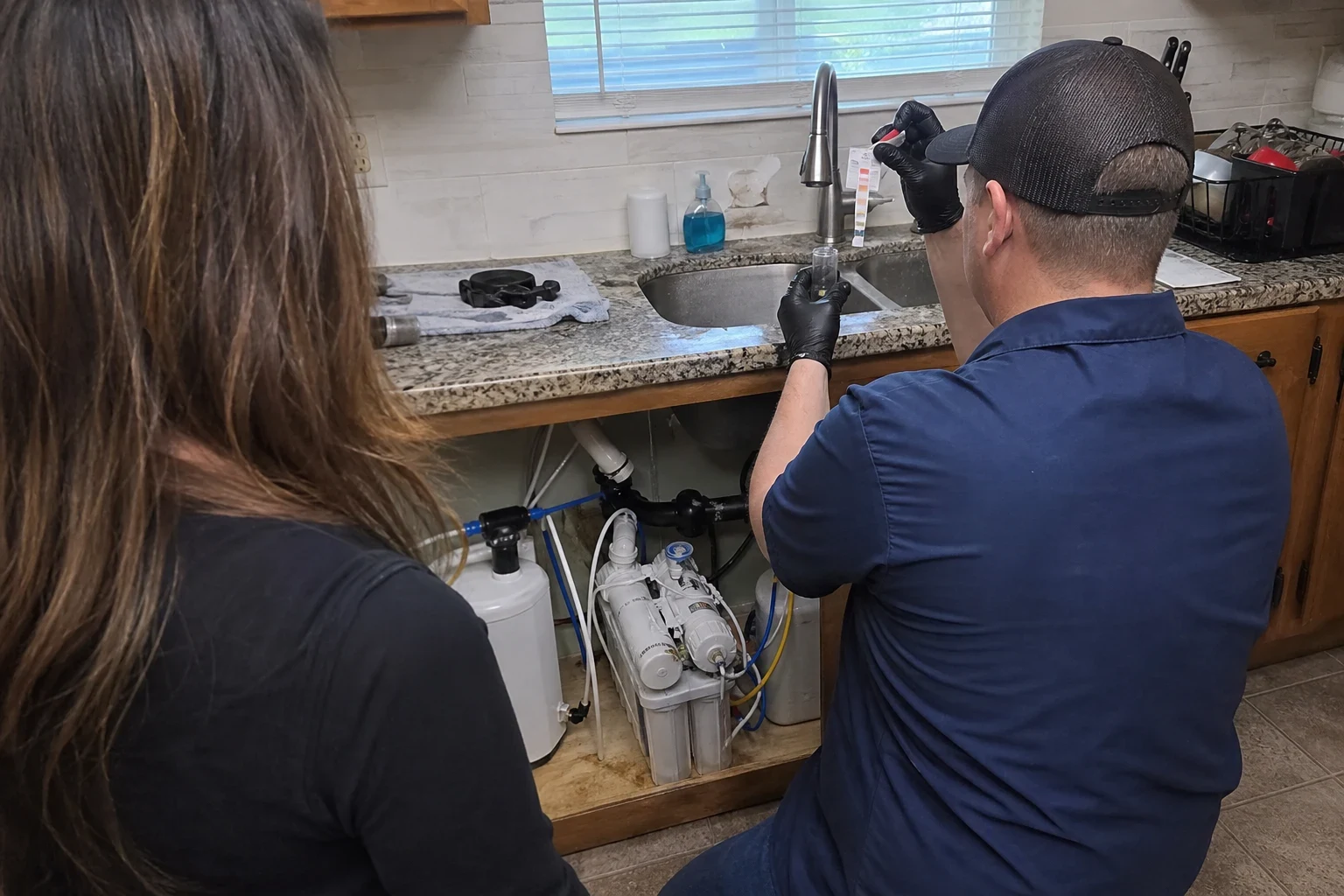
- A water test before we size anything
- We read hardness and several other numbers at your kitchen tap. There is no charge, zero obligation, and you keep the results.
- Sizing we explain
- Capacity is set by your hardness number and the number of people in the house. We walk you through the math so the size makes sense to you.
- Installation in the price
- The install is part of the system. Partner plumbers handle the plumbing, so the price you hear covers a working softener, not a carton left in the garage.
- Bypass, drain line and programming
- Each install includes a bypass valve, so you can take the softener offline and still have water. The drain line is run correctly and the control is set to your readings.
- Old softener removed
- Swapping out a worn unit? We unhook it, cap any open lines and haul it away.
Signs Your Home Needs a Softener
Scale that keeps coming back
You scrub the faucet base and showerhead, and a week later the chalky ring is back. That is mineral scale, and cleaning only buys you a few days.
Spotty dishes and shower glass
Cloudy spots that will not wipe off usually mean hard water drying on the surface.
Crackling from the water heater
Minerals sink to the bottom of the tank and crackle when the heat kicks on. The heater has to run longer to warm the same water, and that wears it out sooner.
Soap that will not lather
If shampoo and dish soap go flat fast, minerals are tying them up. Many people also notice dry skin after a shower.
An old softener acting up
Salt that never goes down, a brine tank full of water or a control that lost its settings after a monsoon power outage all point to a unit that needs a look. If the tank is leaking onto the floor, turn the bypass valve and give us a call. That stops the water while you decide what to do next.
What Sets the Price of a Softener
We do not price from a chart. Your number comes from your water and your plumbing, and we give it to you by phone after the free test with the install already counted. These are the things that change it.
Hardness and household size
Harder water and more people in the house both put more load on the softener, which can mean stepping up to a larger tank.
Install location
Lots of newer homes have a capped loop already plumbed for a softener, and hooking into it goes fast. Homes without one need the main line opened up and new pipe added, which adds time.
Timer or metered valve
A metered valve regenerates by how much water you actually use. It runs a little higher at first, but it usually goes through less salt than a simple timer valve.
Taking out an old unit
Removing a current softener and repairing worn connections adds a bit to the job.
Extra equipment
A carbon filter for taste is sometimes paired with the softener. We only mention it when your test results or your concerns point that way.
How a Softener Job Runs
- 1
A short phone call
Tell us what you are seeing and where your water line comes in. We set a time for the free water test.
- 2
Test and recommendation
We test at your home and walk you through the numbers. If a softener fits, you get the installed price for the system we would put in. If it does not, we tell you.
- 3
Install day
Our partner plumbers shut off the main, cut in at the install spot, add the bypass and run the drain. Most installs are done in part of a day, and your water is off for only part of that.
- 4
Startup and walkthrough
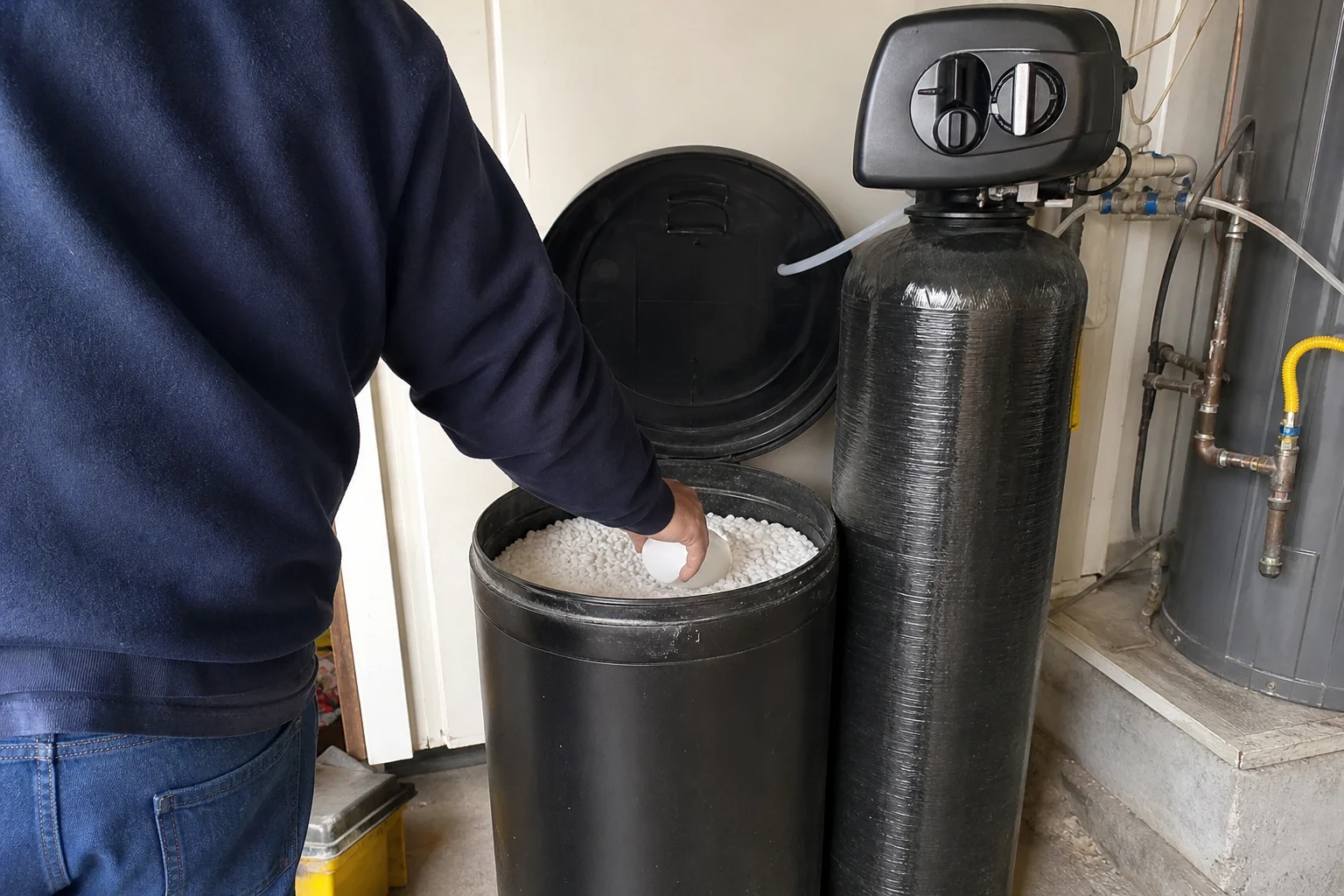
We fill the brine tank, run a first regeneration and test the softened water. Before we pack up, you get a quick lesson on topping off salt and flipping the bypass, and we clean the work area.
Common Softener Questions
Does softened water taste like salt?
Very few people notice anything. The softener trades hardness minerals for a little sodium, which is not the same as salt dropped in your glass. If you would rather drink water without it, the under-sink system on our Reverse Osmosis page takes care of that at the kitchen faucet.
Who does the actual softener install?
Licensed and insured partner plumbers handle the plumbing in your home. Our part is the water test, the sizing and the installed price. Any question before, during or after install day goes to the same phone number, and we answer it.
Does a softener come with a warranty?
It can. Qualifying systems have a lifetime warranty on their tanks. As you compare options, we will tell you which ones qualify before you make a choice.
What maintenance does a softener take?
Salt, mostly. Look in the brine tank once a month and keep it roughly half full. After a long power outage, make sure the clock and settings on the control are still right.
My softener quit. Is it worth repairing or should I replace it?
That comes down to what broke. A stuck valve or a salt bridge is often repairable. A cracked tank or spent resin in an older unit rarely justifies the repair cost, and we will let you know which situation you are in.
See Whether a Softener Makes Sense for You
First comes a free water test with no obligation. After that you get an installed price and an honest answer on whether a softener is worth buying.